A smart city is broadly defined as a municipality that uses networked information and communication technologies (ICT) – including sensors, connected devices, and data analytics – to improve operational efficiency, share information with the public, and enhance the quality of government services and citizen welfare. In essence, the goal is to optimize city functions, drive sustainable economic growth, and improve residents’ quality of life through data-driven decisions. Crucially, the strategic value of a smart city lies not in how much technology is deployed, but in what the city does with the technology – how data insights are harnessed to deliver tangible benefits for citizens. This means technology is a tool to achieve outcomes like safer streets, cleaner air, more efficient transit, and more responsive public services, rather than an end in itself.
Smart city initiatives typically involve a few key ingredients. Networks of IoT sensors (and even mobile citizens as data sources) collect real-time data throughout the urban environment; connectivity infrastructure (from broadband to 5G) links this data to city platforms; and open data policies ensure the results and insights are shared transparently for public benefit. Ultimately, a smart city is about using these digital tools to better coordinate resources and services across the whole city system. When done right, this approach can help city leaders tackle strategic priorities such as sustainability, resilience, and social inclusion. For instance, smart cities are seen as key enablers of global sustainability agendas – aligning with the United Nations Sustainable Development Goal 11 to make cities “inclusive, safe, resilient, and sustainable”. In short, smart cities matter because they offer a pathway for municipalities to address urban challenges more proactively and effectively by leveraging modern technology and data-driven innovation, all while keeping citizens at the center of these efforts.
Key Urban Challenges in the 21st Century

City leaders today face a host of complex urban challenges that smart city strategies aim to address. Foremost is the strain on infrastructure and mobility: roads, transit systems, utilities, and public facilities are under pressure from growing urban populations and aging assets. Many cities experience worsening traffic congestion, longer commutes, and overloaded public transport. As one report noted, rising populations are adding strain to already aging city infrastructures – with residents feeling the impact in longer wait times for transit and more frequent rush-hour gridlock. Alongside mobility issues, cities must confront sustainability and environmental pressures. According to National Geographic, rapid urbanization has contributed to higher pollution and resource consumption – urban areas account for roughly 70% of global greenhouse gas emissions and often suffer poorer air quality than rural areas. Cities are also vulnerable to climate change impacts (heatwaves, flooding, etc.), forcing a rethink of how to build resilience into infrastructure and services.
Another challenge is in municipal governance and service delivery. City governments traditionally operate in silos – separate departments managing transportation, water, energy, public safety, etc. – which can lead to fragmented data and inefficient processes. Breaking down these silos is difficult but essential for holistic city management. Smart city programs highlight the need for better coordination and data-sharing across agencies. As observed in Smart City Barcelona’s experience, technology alone is not enough – cities must rethink organizational structures and foster cross-department collaboration so that data and digital tools can be used effectively across domains. In practice, that means integrating formerly isolated systems and encouraging an open, collaborative approach to governance. Additionally, ensuring citizen engagement and transparency is an ongoing challenge: residents expect to be informed and involved in decisions about their city, and trust can be undermined if smart city projects are perceived as invasive or top-down. Establishing clear data governance (who owns and accesses urban data) and protecting privacy are now core concerns (as discussed further below).
Finally, cities must continually improve their public safety and emergency response capabilities. Natural disasters, health crises, and security incidents can overwhelm urban systems. First responders often contend with delayed information and traffic-clogged routes in emergencies. The challenge is to react faster and more intelligently – for example, detecting incidents in real time and coordinating multi-agency responses. The COVID-19 pandemic, for instance, highlighted the importance of data dashboards and IoT-based monitoring (for hospital capacity, infection rates, etc.) to guide emergency measures. More routine emergencies like fires or accidents also benefit from smarter coordination – consider that if ambulances or fire trucks can automatically get green lights on their way to an incident, precious minutes can be saved. In summary, aging infrastructure, environmental sustainability, siloed governance, data fragmentation, and emergency responsiveness stand out as critical pain points for modern cities. Smart city strategies are motivated by these pain points and seek to address them through innovation.
How IoT, Edge Computing, and AI Help Address These Challenges

Modern technologies – especially the Internet of Things (IoT), edge computing, and artificial intelligence (AI) – form the backbone of smart city solutions. IoT refers to the network of physical devices embedded with sensors, software, and connectivity, allowing them to collect and exchange data. In a smart city context, IoT devices can include everything from air quality sensors and traffic cameras to smart meters on water/electric lines and connected thermostats in buildings. By 2025, tens of billions of such devices are deployed globally, and cities rely on them as the “digital ears and eyes” of urban operations. These sensors continuously monitor conditions – measuring traffic flow, energy usage, pollution levels, waste bin fill status, noise, weather, foot traffic, and more – providing a rich, real-time picture of how the city is functioning. Communication networks (LPWAN, 4G/5G, fiber, etc.) then relay this data to central systems. IoT is thus the foundation that enables a city to be observant and responsive rather than blind to on-the-ground realities. As TechTarget succinctly puts it, smart cities “rely first and foremost on IoT” – a multitude of connected sensors and devices whose data, when analyzed, helps converge the physical city with digital intelligence. For example, thousands of IoT sensors installed across a city can feed into a central dashboard that city managers use to spot issues (like a water pipe leak or a traffic jam) in real time and respond proactively.

One challenge with massive IoT deployments is the sheer volume of data and the need for real-time action. This is where edge computing comes into play. Instead of sending every bit of sensor data to a distant cloud data center for processing, edge computing means placing computing resources closer to where data is generated – often directly on devices or local gateways. In a smart city, edge-enabled IoT devices or local micro-datacenters can perform initial data processing and even automated decision-making on-site. For instance, a network of smart traffic cameras with edge processors can locally analyze video feeds to detect an accident or congestion and instantly adjust nearby traffic signals, without waiting for instructions from a central server. By preprocessing data and handling simple actions at the network edge, cities reduce latency and communication loads, which is crucial for time-sensitive functions. Incorporating edge computing in IoT deployments ensures that only the most important, filtered information is sent over networks, and immediate responses (like triggering an alert or changing a signal) can happen in milliseconds right at the source. This makes the entire system more resilient and efficient – for example, during an internet outage, edge devices might still keep critical services running autonomously. Municipalities thus see edge computing as a way to improve the reliability and speed of smart city applications, from traffic management to public safety systems, while also alleviating connectivity bandwidth costs.
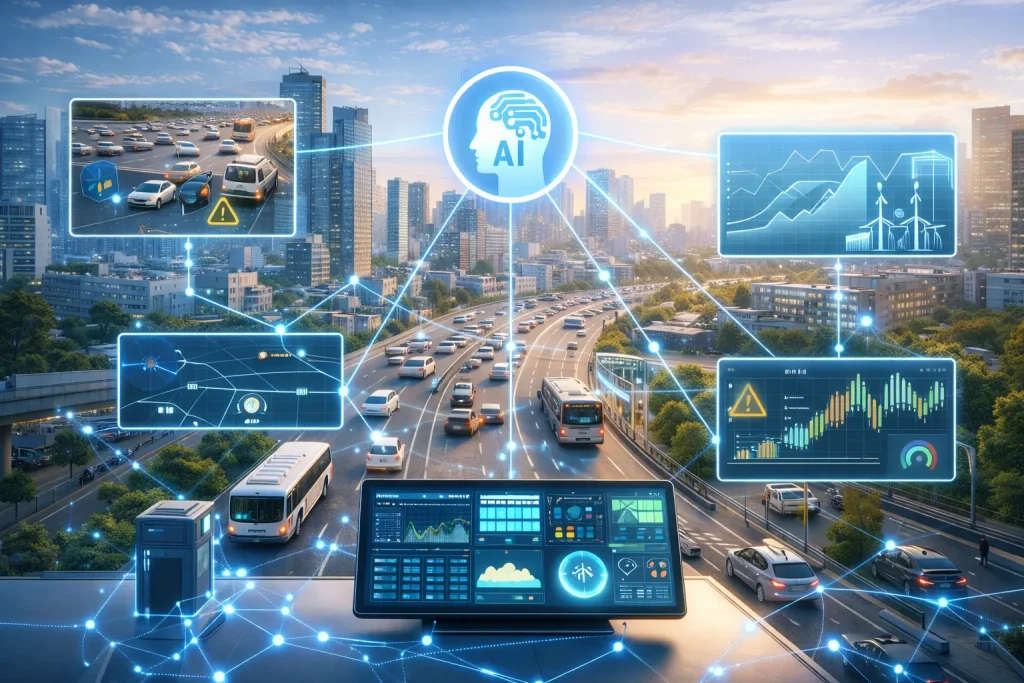
The third key enabler is artificial intelligence (AI) and data analytics. IoT sensors generate big data, but that data’s value is realized only when we derive insights and informed actions from it. AI – including machine learning algorithms – can analyze these massive, dynamic datasets far more quickly and accurately than manual methods. Practically, AI in a smart city is used to detect patterns, anomalies, and trends, and to make predictions or optimizations. For example, AI-driven analytics can predict peak electricity demand on the grid and help adjust power generation in advance, or optimize waste collection routes by learning which bins tend to fill up on which days. In the mobility arena, many cities are deploying AI to tackle traffic congestion: predictive algorithms crunch real-time traffic sensor data and historical patterns to forecast where jams will form, dynamically adjust traffic signal timing, and even recommend alternate routes to drivers. As per Medium cities like Atlanta and San Francisco have reported up to 18% reductions in commute times after implementing AI-powered traffic management systems that optimize signal plans and provide drivers with real-time rerouting advice. Likewise, AI is improving public transit efficiency – e.g. by analyzing ridership data to adjust bus frequencies – and enhancing road safety (some U.S. cities using computer-vision AI to monitor intersections saw ~15% declines in accidents by early warning of red-light running or other hazards. Beyond transport, AI helps optimize energy use in smart cities. Machine learning models can regulate smart grids and building systems: Los Angeles, for instance, uses AI in its electricity grid which led to a ~20% reduction in energy losses and improved grid reliability. And in Copenhagen, AI algorithms managing the district heating system (integrating solar and wind inputs) have helped achieve about a 30% reduction in carbon emissions while meeting residents’ heating needs. These examples illustrate how AI turns raw sensor data into actionable intelligence – finding efficiencies and preempting problems in a way that scales across an entire metropolis.
Summarizing, IoT provides the data, edge computing provides speed and resilience, and AI provides the “brain” to make sense of it all. Together, these technologies allow cities to move from reactive problem-solving to proactive and even predictive management of urban systems. For example, consider emergency response, which spans all three: IoT sensors (from CCTV cameras to fire detectors) can instantly detect an incident and pinpoint its location; edge computing devices at traffic lights can then immediately clear the path for emergency vehicles by turning lights green in their direction and AI analytics can help dispatchers allocate resources or even predict where emergencies are more likely to occur. This integrated tech approach directly tackles the earlier challenges – mitigating infrastructure strain (by dynamically managing traffic and utilities), improving sustainability (through optimized resource use and integration of renewables), breaking down silos (via centralized platforms that aggregate data across departments), and enabling faster, smarter emergency management.
It is worth noting that deploying these technologies at city scale is not trivial. Municipal IT teams typically collaborate with industry partners, research institutions, and system integrators to design and operate solutions that are both technically robust and institutionally sustainable. A variety of smart city platforms exist to support this effort, providing an integration layer that aggregates heterogeneous IoT devices and data streams into a coherent operational environment with common data models and interfaces; SmartWhere City is one example of such a city-oriented platform approach, among others.
In practice, these platforms commonly provide capabilities such as device and connectivity management, real-time and historical data analytics, rule-based automation, and application programming interfaces (APIs) for controlled data sharing. In parallel, many cities choose to expose selected datasets to external stakeholders through public data portals, publishing real-time or near-real-time information on topics such as traffic conditions, environmental quality, or parking availability. This practice enables researchers, entrepreneurs, and civic technology communities to build complementary services and applications on top of municipal data.
Cities such as Barcelona and Helsinki have been early proponents of this open data approach, making urban IoT data accessible in a transparent and structured manner to both the public and private sectors. While public data portals are not the primary objective of smart city programs, they serve as an important indicator of governance maturity and openness, and can significantly amplify the societal and economic value of urban data assets. Taken together, IoT, edge computing, and AI technologies—supported by appropriate platform architectures and data-sharing practices—form the technical foundation that enables cities to address complex urban challenges in a holistic, data-driven way.
Data Governance, Security, and Regulatory Considerations

Implementing smart city technologies at scale brings significant governance and policy challenges. Municipalities must navigate privacy concerns, cybersecurity risks, and regulatory requirements while deploying IoT and AI solutions. In the European Union, several regulations directly impact smart city initiatives and impose obligations to protect citizens and critical systems:
- Data Privacy (GDPR): The EU’s General Data Protection Regulation (GDPR) is a foundational law that governs personal data use and privacy. Smart cities, by nature, collect vast amounts of data – some of which is personal or can be privacy-sensitive (think of video from public cameras, Wi-Fi usage data, license plate numbers, face recognition, etc.). According to the IoT Security Institute, GDPR “directly impacts how smart cities manage personal data”, and the integration of IoT sensors and AI analytics in public services makes compliance particularly complex. Key principles of GDPR such as data minimization, purpose limitation, and obtaining consent can be challenging when data is collected ubiquitously by city devices. For example, a network of smart lighting sensors might incidentally capture information about individuals’ movements, raising questions of what legal basis the city has for processing that data and how citizens are informed. Cities must ensure privacy-by-design in their systems – embedding mechanisms to anonymize or aggregate data, secure it, and respect individuals’ rights. GDPR mandates measures like conducting Data Protection Impact Assessments for high-risk projects (e.g. city-wide CCTV or large-scale mobility tracking) and giving people control over their data. In smart city contexts, issues like data sharing between multiple parties (city departments, private contractors, platform vendors) also require clear agreements on who is responsible for privacy compliance. Simply put, protecting citizen privacy is paramount: smart city programs need robust governance frameworks so that technology enhances public life without crossing the line into surveillance. Cities like Helsinki and Barcelona have been leaders in transparency, publishing what data they collect and even creating data ethics boards to oversee smart projects.
- Cybersecurity (NIS2 Directive & Critical Infrastructure): With so many essential services becoming digitally connected, cybersecurity is a major concern. The EU’s NIS2 Directive (an update to the Network and Information Systems directive) came into force in 2023 and expands cybersecurity obligations to a broad range of sectors, many of which are pillars of smart city operations. This includes energy, transport, water, healthcare, digital infrastructure, public administration and more – effectively covering the IT systems behind utilities, traffic control, government services, etc. Under NIS2, cities and the agencies or companies operating these services must adhere to strict risk management practices and incident reporting rules. Notably, NIS2 holds city leadership (directors and executives) personally accountable for cybersecurity compliance. This is spurring many municipalities to prioritize cyber investments and training – it’s no longer just an IT issue but a governance issue. Smart city platforms must be secured against hacking, IoT devices need regular security updates, and supply chain security (ensuring vendors and service providers also meet cybersecurity standards) is explicitly mandated. The directive requires an “all-hazards” approach: cities need policies for risk analysis, business continuity, encryption, access control, and more. Failure to comply can result in hefty fines (for essential entities, up to €10 million or 2% of global turnover). The overall effect is that smart cities in the EU must bake in cybersecurity from the start – whether deploying a citywide sensor network or a data dashboard, a risk assessment and mitigation plan is now a prerequisite, not an afterthought. This is positive for resilience, though it also raises the bar (and cost) for projects. City leaders should see cybersecurity compliance as part and parcel of smart city governance, aligning with the view that without cyber resilience, the digital city could grind to a halt or lose public trust in the event of a breach.
- IoT Device Security (EU Cyber Resilience Act): Another forthcoming EU regulation, the Cyber Resilience Act (CRA), is poised to impact smart city procurements and vendors globally. The CRA (still in approval stages in 2025) will impose cybersecurity requirements on manufacturers of connected devices and software, ensuring that IoT products have security features built-in (such as secure update mechanisms, vulnerability disclosure, etc.). The aim is to eliminate the scourge of insecure IoT gadgets that can be easily hijacked. Regulations like the CRA will require that IoT software updates be made available throughout a device’s lifecycle, and NIS2 in turn will imply that organizations diligently apply those updates to stay secure. In practical terms, a city deploying e.g, smart traffic sensors under the CRA would expect the vendor to provide ongoing firmware patches and under NIS2, the city’s IT team would be required to promptly install those patches. These twin pressures ensure that IoT systems remain resilient against evolving threats. Municipalities should begin vetting their tech suppliers for compliance with such standards (even ahead of full enforcement) – for instance, asking for CE markings or security certifications on IoT devices, and including clauses in contracts about software support and security maintenance.
Beyond Europe, other regions have similar trends: many countries have introduced IoT cybersecurity guidelines or privacy laws that echo these principles. Globally, there is also an increasing recognition of the need for ethical frameworks and citizen rights in smart cities. For example, the Canadian experience in Toronto (see case study below) underscored how a perceived lack of privacy safeguards can derail a smart city project. To build public trust, cities are publishing charters for how technology will (or won’t) be used – for instance, pledges not to use personal data beyond stated purposes, or commitments to algorithmic transparency for AI systems used by the city. International collaborations are emerging to share best practices. One notable initiative is the G20 Global Smart Cities Alliance on Technology Governance, led by the World Economic Forum. It has brought together cities and industry from around the world to develop common principles for responsible, ethical smart city technology use, covering issues like transparency, privacy, security, equity, and data openness. By establishing global policy norms and toolkits, this alliance helps cities accelerate adoption of best practices and gain openness and public trust in smart city deployments. Municipal leaders would do well to familiarize themselves with such frameworks – they serve as a helpful guide to ensure that as we digitize urban environments, we do so in a way that protects residents’ rights and earns their confidence. In summary, smart city success is not just about tech – it requires strong governance: clear rules on data use, robust cybersecurity, compliance with regulations like GDPR/NIS2, and adherence to ethical standards. Building a smart city is as much a question of policy architecture as it is of technical architecture.
Case Studies: Smart Cities in Action
To illustrate how these concepts come together, consider the experiences of several leading smart cities around the world. These case studies – from Europe and beyond – demonstrate various approaches to leveraging IoT, data, and partnerships to solve urban problems:
Barcelona (Spain) – A Holistic Smart City Model

Barcelona is often cited as a pioneer in smart city strategy. The city’s comprehensive program (dating back over a decade) shows the impact of strong political will, integration across departments, and citizen-centric design. Barcelona’s City Council set up a dedicated Smart City initiative that identified 12 key domains for intervention – including mobility, environment, energy, water, waste management, urban public space, and open government – and launched 22 ambitious programs comprising over 80 pilot projects. At the heart of Barcelona’s approach is a unified ICT architecture sometimes called a “network of networks.” Rather than deploying siloed tech in each department, Barcelona built a city-wide platform (based on an open-source urban data hub called Sentilo) that interconnects formerly separate IoT systems – from smart street lighting to irrigation sensors – into one integrated network. This integration broke down data silos and allowed the city to manage resources in a coordinated way. For example, data from buses, traffic sensors, and streetlights can be combined to optimize traffic flow and pedestrian safety in real time.
Barcelona also extensively deployed IoT devices: by the mid-2010s it had rolled out 19,000 smart energy meters in municipal buildings and facilities to monitor electricity use, smart irrigation systems in parks that adjust watering based on weather sensors, and smart waste bins with fill-level sensors to optimize garbage collection routes. In transportation, the city introduced tools like real-time bus tracking apps and smart parking systems (drivers can use a mobile app to find free parking spots, reducing congestion and idling). According to Local Action the results have been impressive. By leveraging IoT data and analytics, Barcelona achieved significant efficiency gains – for instance, saving an estimated €92 million in costs through smarter resource management (such as more efficient water usage and streetlight energy savings) and creating some 47,000 new jobs in the tech and innovation sector as a result of its smart city projects. Notably, the city’s smart lighting alone (which dims or brightens streetlights based on need) cut energy usage by about 30%. Barcelona’s open data portal further enhances transparency: residents can access live data on everything from air quality to traffic incidents, which has boosted public trust and spurred local start-ups to build apps using city data. Another hallmark of Barcelona’s success is governance innovation – the city created cross-departmental teams under its CIO to ensure data and systems could flow across agencies smoothly. This reorganization, combined with strong Mayor’s office support, kept the focus on using tech to serve people’s needs (e.g., digital citizen services, participatory budgeting platforms) rather than tech for tech’s sake. Barcelona’s journey demonstrates that a smart city must invest in connectivity (the city laid hundreds of kilometers of fiber and provided free WiFi hotspots citywide), listen to citizens, and integrate solutions across various urban systems. Today, Barcelona stands as a model “smart city ecosystem,” often hosting international conferences (like the Smart City Expo World Congress) to share lessons globally.
Wrocław (Poland) – IoT Infrastructure and Innovation Testbed

Wrocław, a major city in Poland, provides a great example of a fast-follower city embracing IoT to tackle local issues. In recent years Wrocław has built out a robust low-power IoT network covering the city, using LoRaWAN (Long Range Wide Area Network). This network enables the city to connect thousands of battery-powered sensors over long distances at low cost – forming the communications “nervous system” of its smart city initiatives. Uniquely, Wrocław worked with academic partners (Wrocław University of Technology) and industry (telecom providers) to deploy LoRaWAN gateways at strategic points, and made the network open for public use – meaning startups and universities can use the city’s IoT network to connect their own sensors for experimentation. On the application side, Wrocław has piloted a number of IoT-based services. One notable project is smart waste management: the city installed “intelligent dustbins” with sensors that report their fill level at 25%, 50%, 75%, etc., and even send alerts if vandalize. This data feeds into a system for optimizing garbage truck routes – trucks are automatically directed to only those bins that actually need emptying, which reduces unnecessary trips, fuel usage, and street clutter. Another project is SmartFlow, an intelligent water network management tool that uses pressure and flow sensors across the water grid to detect leaks early and manage water distribution efficiently. Wrocław has also modernized street lighting by installing LED lamps with IoT controls (able to dim or brighten in response to real-time conditions), and implemented smart parking systems for buses and disabled parking spots using sensor data.
These efforts helped Wrocław gain recognition in global smart city rankings – it was listed among the top 100 smart cities worldwide in the IESE Cities in Motion Index, reflecting strengths in technology and economy. The city’s collaboration with companies like Nokia has further accelerated its digital transformation. In a strategic partnership, Nokia is helping Wrocław develop a “city as a platform” approach using advanced networking (5G), cloud and edge computing to roll out citizen-centric service. Early focus areas include intelligent transport systems (to reduce congestion and pollution), public safety enhancements (IoT-enabled monitoring and emergency response coordination), and digital health services for an aging population.
Wrocław’s case illustrates that even mid-sized cities can leap forward by investing in a solid IoT infrastructure and fostering an innovation ecosystem around it. By providing an open IoT network and working closely with local universities and startups, Wrocław turns the city into a living lab – tackling local pain points (like waste collection inefficiencies and water losses) with tailor-made tech solutions, while also boosting the local tech industry.
Helsinki (Finland) – Open Data and Digital Twin for Citizen-Centric Planning

Helsinki, Finland’s capital, has embraced smart city concepts with a strong emphasis on open data, transparency, and co-creation. One of Helsinki’s flagship projects is its 3D city model and “digital twin” of the entire city. The city created a virtual model called Helsinki 3D+, which is essentially a digital replica of Helsinki’s buildings, streets, and infrastructure enriched with real-time data layers. This digital twin serves as a collaborative platform for urban planning and simulation. For example, city planners can test how a new building might cast shadows or affect wind patterns, or simulate traffic flow changes from a new bus line – all in the virtual model before making real-world decisions. What’s special is that Helsinki has made this model and many data streams publicly accessible. By providing open access to the virtual city and data (under an open data license), Helsinki invites tech companies, researchers, and citizens to use it for their own analyses and applications. This openness has fostered a culture of transparency and innovation; local startups have built map-based apps and even VR experiences on top of the city’s 3D data. Citizens can go online and visualize planned developments in their neighborhood, improving public engagement in the planning process.
The digital twin is complemented by numerous IoT and data initiatives. Helsinki has sensors monitoring air quality, traffic, and noise levels, with data published on its open data portal in real time. The city’s open data service dates back to 2010, leading to Helsinki being ranked among the most open and smart cities globally. Another area where Helsinki shines is smart mobility: it was one of the first cities to experiment with Mobility-as-a-Service (MaaS) concepts (integrating public transit, ride-share, and other options in one app) and even autonomous shuttles in some districts as pilots. The city also runs smart traffic lights that prioritize public trams and buses (using sensors to detect approaching transit and giving them a green light) to speed up public transport. In terms of governance, Helsinki actively involves residents through digital platforms – for instance, a mobile app allows citizens to report issues (like potholes or broken streetlights) which are then routed to the appropriate department for quick fixing, with feedback loops to the reporter. The city’s philosophy is often described as “people-first smart city”, meaning technology projects must align with citizen needs and have public acceptance. An example is the AI chatbot assistant Helsinki introduced (named “Ask Helsinki,” available on the city website) to help answer residents’ questions on city services in multiple languages – using AI to improve accessibility of information for all demographics.
Importantly, Helsinki’s use of advanced tech is guided by ethical principles. Helsinki was among the first to publish an AI Register, documenting how each algorithm (e.g., an AI used for school admissions or library services) works and is governed, to maintain transparency. The city also collaborates with other cities like Amsterdam on an initiative called “AI Register for Cities” to share this practice. Overall, Helsinki’s smart city case demonstrates the value of integrating data for holistic planning and actively engaging the community. By using a digital twin and open platforms, Helsinki can plan more sustainably (for instance, simulating how to reduce energy use or emissions in different scenarios) and ensure that technology serves to strengthen trust between the city and its residents, rather than undermine it.
Singapore – Smart Nation for Seamless Urban Services

Singapore offers a compelling case of a city-state that is effectively a nation-scale smart city. The government’s Smart Nation initiative, launched in 2014, takes a top-down but comprehensive approach to infuse technology across daily life and government operations as a response to the city’s challenges like land scarcity, aging population, and desire for economic innovation. One focus area is intelligent transportation and urban mobility. Singapore has implemented an advanced Intelligent Transport System (ITS) that leverages extensive sensor networks and CCTV cameras on roads, GPS data from thousands of taxis and public buses, and cashless toll systems to manage traffic in real time. A platform called OneMotoring provides a one-stop portal for drivers, giving the public live traffic camera images from highways, travel time estimates, locations of road works or accidents, and even real-time parking availability across the city. This wealth of information (sourced from hundreds of surveillance cameras and IoT devices citywide) helps drivers make informed decisions and allows the Land Transport Authority to quickly respond to incidents. For example, if a breakdown is detected via roadside cameras, an incident response team is automatically dispatched and digital signage advises motorists of delays. Singapore has also been pioneering in autonomous vehicle trials – it ran one of the first driverless shuttle trials and is methodically installing roadside units and digital maps to prepare for wider use of autonomous cars and buses.
Beyond transport, Singapore uses IoT and data to enhance environmental management and public utilities. The national water agency deploys IoT water sensors to monitor water quality and detect leaks in its supply network (critical for a country that imports much of its water). The energy grid is fitted with smart meters and IoT switches as part of an “Intelligent Energy System” to improve load balancing and empower consumers with detailed usage data. Citizens can download a mobile app by Singapore Power to view their household electricity and water consumption in real time, receive recommendations on reducing usage, and even submit meter readings if needed. This has increased public awareness of energy conservation. Smart waste management is another initiative: Singapore introduced sensor-equipped trash bins which monitor waste levels and alert waste collectors when they need servicing. This optimizes collection routes and reduces overflowing bins in the tropical climate. In the public safety domain, Singapore’s police utilize a network of cameras and an analytics system (the “Safe City” initiative) to enhance city surveillance and incident response. There are systems that can automatically flag anomalies like an abandoned package or altercations on the street, enabling quicker reaction by authorities. Such pervasive sensing naturally raised some privacy questions, but the government’s stance has been that these measures are for collective security and are governed by strict laws (and indeed Singapore has detailed data protection laws, though with public sector exemptions that have drawn debate).
A cornerstone of Singapore’s approach is strong central coordination: the Smart Nation and Digital Government Office oversees projects across agencies to ensure interoperability and standards. They also built a nationwide sensor network called Smart Nation Sensor Platform – essentially a common infrastructure of lampposts and hubs that any agency’s sensors can piggyback on, rather than duplicating hardware. Singapore’s compact size and governance model allow it to implement citywide systems relatively quickly, making it a living laboratory. Results are evident in improved urban outcomes: for example, the intelligent transport efforts have helped keep Singapore’s traffic congestion one of the lowest for cities of its size, and the electronic road pricing (ERP) system – an IoT-driven congestion pricing scheme – has successfully managed demand on busy roads for years. The city has also seen energy and water savings from its smart grid and water projects (reducing water loss to one of the lowest rates globally). Perhaps equally important, Singapore positions its Smart Nation initiative as an economic development engine: it attracts tech companies and nurtures startups to develop solutions which can then be exported. The government regularly partners with industry (through MOUs with companies like IBM, Cisco, and local firms) to trial new tech in Singapore’s real environment. For municipal leaders, Singapore underscores the value of a unified vision and integration – its various systems all feed into a central Smart Nation Platform where data can be cross-analyzed. It also highlights the balance between innovation and regulation: Singapore is concurrently drafting frameworks on AI governance and data ethics to address the risks of these powerful technologies even as it pushes forward with implementing them city-wide.
Toronto (Canada) – Lessons from a Smart City Experiment

Toronto’s recent smart city initiative – known widely as the Sidewalk Toronto project – serves as a cautionary tale on the importance of public trust, privacy, and governance in smart city endeavors. In 2017, Waterfront Toronto (a development agency) partnered with Sidewalk Labs (an Alphabet/Google subsidiary) to plan a futuristic smart neighborhood called Quayside on 12 acres of the city’s derelict waterfront. The vision was bold: build “the world’s first neighborhood built from the internet up,” featuring autonomous vehicles, sensor-laden buildings, robotized waste disposal, and data-driven urban design to tackle issues like housing affordability and traffic. The proposed plans included things like heated pavements to melt snow, adaptive traffic lights, modular housing construction, and pervasive data collection (e.g. sensors tracking how public space is used in real time to optimize services). Initially, this promise of a tech-enabled, green, affordable community excited many. However, as details emerged, the project quickly ran into community backlash and scrutiny from privacy advocates. Concerns grew that Sidewalk Labs – being a Google affiliate – would collect vast amounts of personal data in this neighborhood (from location information to Wi-Fi and phone usage data) and potentially use it for corporate gain. The Guardian outlines that prominent Canadian academics and even former BlackBerry CEO Jim Balsillie spoke out, calling Quayside “a colonizing experiment in surveillance capitalism” that treated residents as test subjects and monetizable data sources. In 2019, a chorus of criticism peaked with an open letter by tech venture capitalist Roger McNamee warning that “the value to Toronto cannot possibly approach the value your city is giving up” in data and control.
The core of the issue was data governance: Who would own and control the data gathered in this smart district? Sidewalk Labs eventually proposed an independent “data trust” to manage it, but many found the plan lacking specifics and legal enforceability. There were also worries about algorithmic decision-making (“black box” systems influencing city life without accountability) and the privatization of public services. The Canadian Civil Liberties Association even sued to stop the project on constitutional grounds, arguing it violated privacy rights. Under growing pressure, Waterfront Toronto kept delaying approvals and demanded Sidewalk scale back its ambitions (Sidewalk had initially wanted to eventually expand to a 800-acre area and play a quasi-government role in development, which alarmed officials). By 2020, Sidewalk Labs pulled the plug, and the project was cancelled – citing economic uncertainties, but widely seen as a consequence of the public controversy. Toronto’s smart city experiment thus ended before it began, but it left a legacy of important lessons. First, any smart city initiative must have clear, transparent governance frameworks from the outset, especially regarding data collection, privacy, and community consent. Toronto officials admitted they jumped into this partnership without those pieces fully in place, leading to mistrust. Second, public engagement is critical – residents must be brought into the conversation early, not as an afterthought, to voice their values and concerns. Third, big tech companies entering the urban space need oversight and perhaps new regulatory approaches; cities can’t outsource governance to private entities. On a positive note, the episode did spark productive debates in Toronto about digital governance – the city developed a Digital Infrastructure Plan that lays out principles (like privacy, equity, transparency, stewardship) for any future smart city projects, and it created a Civic Data Trust concept to protect citizen data. In summary, Toronto’s case underscores that technology must align with the public interest and democratic oversight. Even the smartest of technologies will fail to deliver value if citizens feel surveilled or excluded. Smart city leaders should heed this and ensure robust ethical safeguards and community buy-in as they pursue innovation.
Denver (USA) – Smart Districts and Public-Private Collaboration

Denver, Colorado illustrates how U.S. cities are pursuing smart city goals through targeted districts and partnerships. One highlight is the “Peña Station NEXT” project – essentially a smart city mini-district developed near Denver’s international airport. In 2016, Denver partnered with Panasonic (which set up its CityNOW North American headquarters there) to transform this greenfield site into a proving ground for smart technologies. The vision was informed by Panasonic’s experience building a sustainable smart town in Fujisawa, Japan, now applied in the U.S. context. At Peña Station NEXT, the focus has been on sustainable infrastructure and mobility. A large solar photovoltaic microgrid was installed, paired with battery storage, to provide clean power to the development and critical facilities at the airport. This microgrid can operate independently of the main grid if needed, improving resilience (a feature many cities are lookign for in disaster preparedness). The development also features smart LED street lighting throughout – streetlights that are highly energy-efficient and equipped with sensors to adjust lighting based on occupancy or time of night, as well as to capture environmental data. In the mobility realm, Panasonic and Denver tested an intelligent transportation system (ITS) on a stretch of highway connecting the airport. This included roadside units and vehicle-to-infrastructure (V2X) communication that can alert connected vehicles about hazards or allow traffic signals to respond to real-time traffic conditions. The aim is to improve safety and throughput on roads and lay groundwork for autonomous vehicles. In fact, driverless shuttles have been demonstrated at Peña Station, and dedicated connected vehicle corridors are in planning.
What makes Denver’s approach notable is the “testbed” mentality and multi-stakeholder collaboration. By concentrating efforts in a specific district (with city, corporate, utility, and developer involvement), they created a showcase that, if successful, can be scaled up to the broader city. The project brought together the city government, Xcel Energy (the electric utility, which co-developed the solar/storage microgrid), and private developers, coordinated by Panasonic’s CityNOW team. A key takeaway is the value of public-private partnerships (PPP) in accelerating smart city projects. By partnering with tech firms, cities can gain expertise and share costs/risks for complex implementations. However, it requires aligning the project with public goals (Denver’s case benefitted from strong mayoral support and community input around the airport area’s development). Also, starting with a smaller district or corridor can demonstrate returns and build public support before scaling city-wide. Denver’s smart city journey is incremental but steady – with each pilot (whether smart grid, smart lighting, or smart transit) feeding lessons into the next. It exemplifies many American cities’ strategy of pragmatically deploying IoT and data solutions to improve specific services (sustainability, traffic, safety) and then knitting them together over time into a more comprehensive smart city framework.
Each of these case studies underscores that while every city’s path is unique, smart cities are fundamentally about solving urban problems through creativity, technology, and collaboration. Whether it’s Barcelona’s integrated platform yielding millions in savings, Wrocław’s citywide IoT network enabling grassroots innovation, Helsinki’s open-data digital twin engaging citizens, Singapore’s city-as-a-system efficiency improvements, Toronto’s reminder on governance, or Denver’s “sandbox” of PPP innovation – the common thread is using real-time data and connectivity to make cities more livable, sustainable, and well-governed. For municipalities, the expert consensus is clear: start with the challenges and goals of your city, ensure you have the policy frameworks (on privacy, security, etc.) in place, and then leverage IoT, AI and partnerships in a targeted way to achieve those goals. A smart city is not built overnight – it’s an iterative journey of learning and adapting. But with a neutral, citizen-focused and strategic approach, city leaders can harness these emerging technologies to create safer, greener, and more prosperous urban communities for everyone.
References
- United Nations
“Sustainable Development Goals (SDGs)” - National Geographic Education (2024)
“Sustainable Development Goal 11: Sustainable Cities and Communities” - SmartCitiesWorld (2020)
“G20 Global Smart Cities Alliance” - TechTarget (2025)
“What is a smart city?” – Definition and key characteristics - Transforma Insights (2025)
“Regulations for Digital Transformation” – Note on EU CRA and NIS2 - Cities of the Future (2025)
“NIS2 Directive Casts a Wider Net Over Smart City Infrastructure” - IoT Security Institute
“GDPR Compliance in Smart Cities: Navigating Privacy Challenges…” - SDG Local Action (2025)
“Smart City Barcelona: a network of networks” - Wroclaw.pl (2022)
“Pillars of Smart City Wrocław” - Mayors of Europe
“Copenhagen: AI Rewriting the Rules of Urban Energy” - RCR Wireless (2017)
“Smart city technology in Singapore” - The Guardian (2019)
“‘Surveillance capitalism’: Toronto’s smart city project faces criticism” - Panasonic Newsroom (2016)
“CityNOW Project with City of Denver” - Robustel (2022)
“How IoT improves emergency systems in Smart Cities” - Medium (2025)
“AI in Smart Cities: Optimizing Transport and Energy”
Related Resources
- SmartWhere City: Smart City platform overview
- iot.info.pl: Public real-time urban data portal for Poland
- Smart Buildings: Energy Efficiency and Comfort through IoT